FKL – Forum Klanglandschaft
Francis Sosta
2025
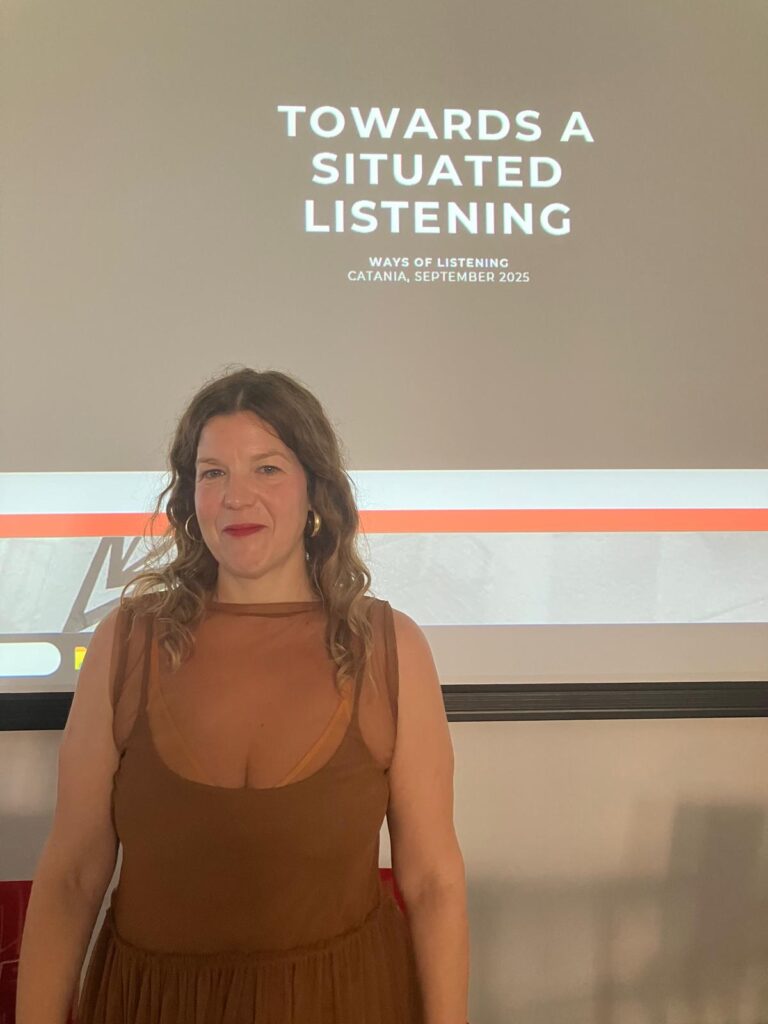
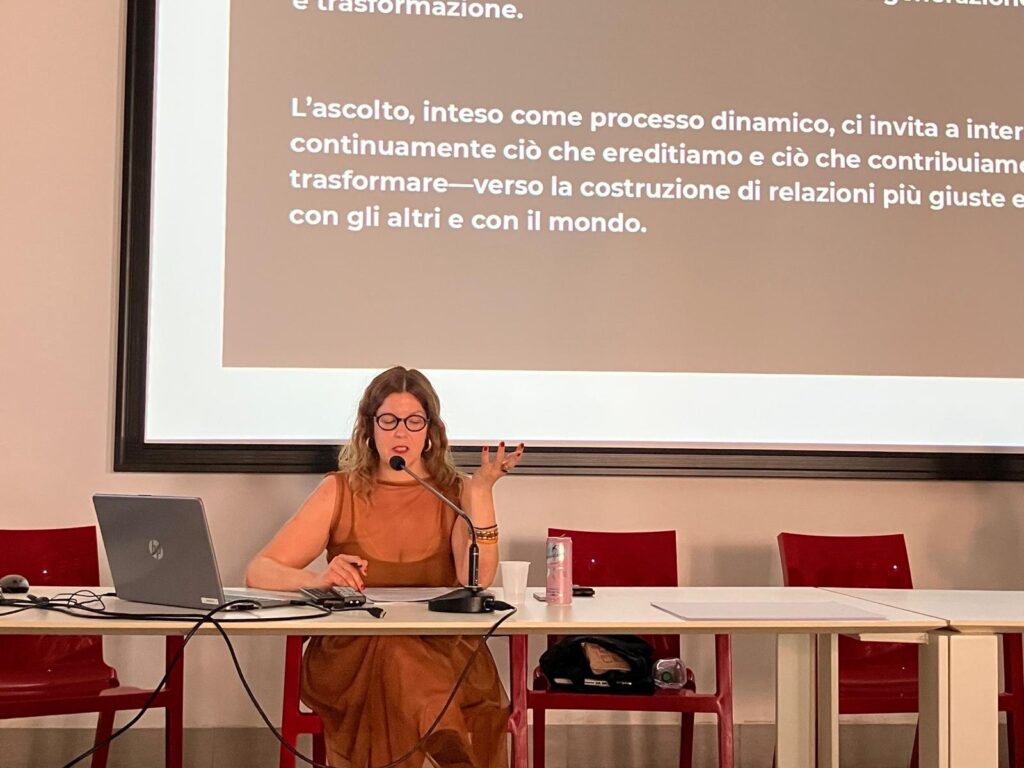
Convegno internazionale Ways of Listening, Catania
In recent decades, interest in listening as a practice, process, and methodology has led to a significant amount of feminist and decolonial research critically questioning the relationship between race, class, gender, and politics of location in relation to what is heard and, above all, what remains unheard. This shift in direction—from a presumed objectivity and materiality of sound to a relational perspective—has reoriented sound studies and encouraged a situated perspective of listening that is no longer limited to the ear or the acoustic event, but as an embodied sound experience, co-constructed through relationships with a specific space, time, and context.
Starting from the definition of situated knowledges proposed by Donna Haraway (1988), which draws attention to the historical, cultural, and social implications of all forms of knowledge through a feminist and anti-Eurocentric critique of dominant models of epistemic production, this lecture focuses on situated listening as an essential practice for orienting oneself in a context of global polycrisis, as well as a fundamental tool for navigating, imagining, and collectively co-creating the world we inhabit. Placing listening as an ethical and political act, as well as a process and methodology, implies recognizing sound as a form of knowledge production capable of countering dominant narratives and activating practices of alliance and cultural resilience that are plural, collective, intersubjective, and interspecies.
In order to approach a practice of listening capable of offering critical strategies for navigating contemporary polycrises, key concepts such as the positionality of listening (D. Robinson, 2020) and situated listening (Loveless, Rennie, Sondergaard, Zinovieff, 2025) will be explored in depth. Through the analysis of a selection of recent theoretical contributions, the aim is to outline a critical theoretical-practical landscape capable of questioning—through sound—the existing power relations and systems of domination that cut across economic, social, and cultural structures, in order to broaden our understanding of listening as a generative and transformative practice.